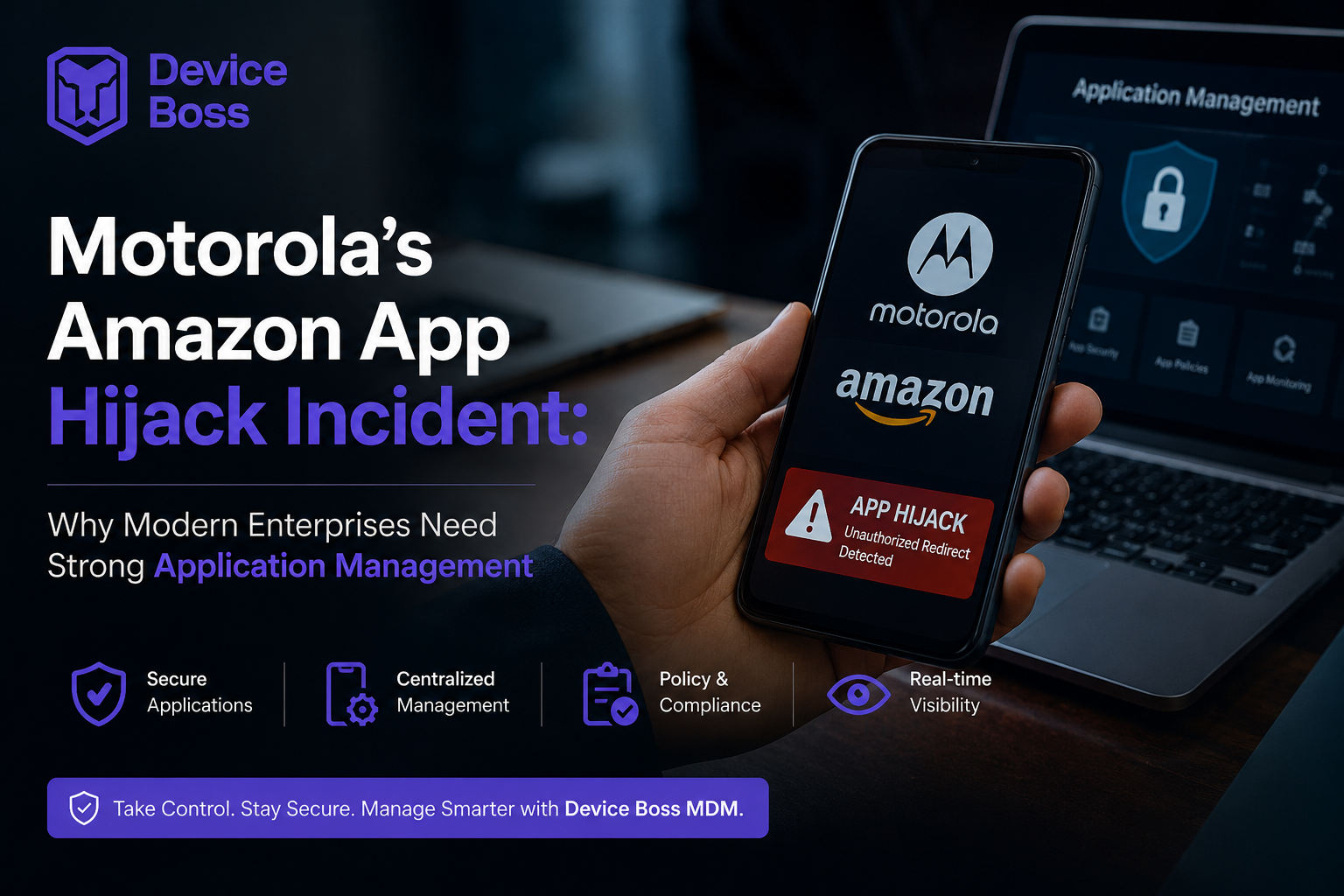
Motorola’s Amazon App Hijack Incident: Why Modern Enterprises Need Strong Application Management
When Your Smartphone Starts Rewriting App Behavior Without Permission
A recent cybersecurity controversy involving Motorola smartphones has raised serious concerns across the enterprise mobility and cybersecurity ecosystem. Reports revealed that certain Motorola devices were allegedly redirecting users through third-party affiliate tracking links before opening the Amazon Shopping app.
While Motorola later stated the behavior was "unintended" and quickly corrected it, the incident exposes a much bigger issue for enterprises:
how much control do organizations really have over the apps and services running inside employee devices?
For businesses managing hundreds or thousands of Android devices, this is not just a privacy concern anymore. It is an enterprise application governance problem.
What Exactly Happened?
According to multiple reports, Motorola’s pre-installed "Smart Feed" application briefly redirected users through a third-party tracking URL before launching the Amazon app. This process silently injected affiliate tracking codes into user sessions.
Researchers and users observed:
● Browser flashes before Amazon opened
● Hidden affiliate tracking redirects
● Preloaded applications modifying app-launch behavior
● Potential monetization through affiliate commissions
● Third-party app interaction without clear user consent
The issue reportedly affected some newer Motorola devices and appeared tied to a launcher or Smart Feed configuration update. Even if this was accidental, the implications are serious for enterprise mobility teams.
Why This Matters for Enterprises / SMBs
1. Preloaded Apps Can Become Enterprise Risks
Most organizations focus heavily on malware protection and phishing prevention. But modern threats increasingly emerge from:
● OEM customizations
● Pre-installed applications
● Third-party SDK integrations
● Shadow app behaviors
● Background tracking services
If an app can silently reroute traffic today, tomorrow it could:
● Collect enterprise usage telemetry
● Inject unauthorized ads
● Redirect business workflows
● Interfere with secure applications
● Leak metadata and behavioral analytics
For regulated industries, this becomes a compliance and governance nightmare.
2. Application Management Is Now a Cybersecurity Requirement
Traditional device management is no longer enough.
Organizations need:
● Full application visibility
● App permission governance
● Controlled app deployment
● Blocklisting and allowlisting
● App behavior monitoring
● Secure enterprise app containers
● Zero Trust mobile controls
Without centralized app governance, enterprises are essentially trusting every OEM-level integration blindly. And that is a dangerous assumption in 2026.
3. BYOD and Corporate-Owned Devices Face Different Risks
This incident also highlights the growing challenge between:
● BYOD (Bring Your Own Device)
● COPE (Corporate-Owned, Personally Enabled)
● Fully managed enterprise devices
On unmanaged devices:
● IT teams cannot monitor hidden app behavior
● Unauthorized redirects go unnoticed
● Shadow integrations bypass enterprise policies
On managed devices with proper MDM:
● Risky apps can be restricted
● OEM bloatware can be disabled
● App permissions can be controlled
● Work profiles stay isolated
● Enterprise apps remain protected
This is exactly why modern Unified Endpoint Management (UEM) and Mobile Device Management (MDM) platforms are becoming mission-critical.
The Bigger Lesson: Trust Alone Is Not Security
The Motorola incident is not just about affiliate links.
It is about:
● Application integrity
● User trust
● Mobile governance
● Endpoint visibility
● Enterprise control
Modern enterprises can no longer assume:
● Pre-installed apps are safe
● OEM integrations are transparent
● Consumer-grade Android behavior fits enterprise security standards
Every unmanaged application becomes a potential attack surface.
How Device Boss MDM Helps Organizations Stay Protected
Secure Application Management for Modern Enterprises
With Device Boss MDM, organizations gain centralized control over enterprise mobility and application ecosystems.
Key Capabilities
Application Governance
● App allowlisting & blocklisting
● Silent app deployment
● Forced app updates
● Unauthorized app detection
Android Enterprise Management
● Fully Managed Devices
● Work Profile Management
● Kiosk Mode
● OEM policy control
Security & Compliance
● Policy-based access control
● Device compliance monitoring
● Remote app restriction
● Security posture visibility
Enterprise Mobility Control
● Secure BYOD management
● Remote troubleshooting
● Real-time device monitoring
● Enterprise app protection
Why Businesses Need Proactive Mobile Security
Cybersecurity is no longer limited to laptops and servers.
Smartphones are now:
● Corporate endpoints
● Productivity hubs
● Financial transaction tools
● Identity authentication devices
● Access gateways to enterprise systems
A small hidden redirect today can become a major enterprise breach tomorrow. Organizations need proactive mobile governance, not reactive cleanup.
The Motorola-Amazon app controversy is a wake-up call for every enterprise managing mobile devices.
The question is no longer: Is the device secure?
The real question is: Do you fully control what applications inside the device are doing?
Without modern MDM (Mobile Device Management software) and application management, enterprises operate blindly.
Take Control with Device Boss MDM
Protect your enterprise mobility ecosystem with intelligent application management, Android enterprise controls, and proactive device security.
Ready to secure your mobile workforce?
Explore Device Boss MDM and build a smarter, safer, enterprise-ready mobility environment today.